

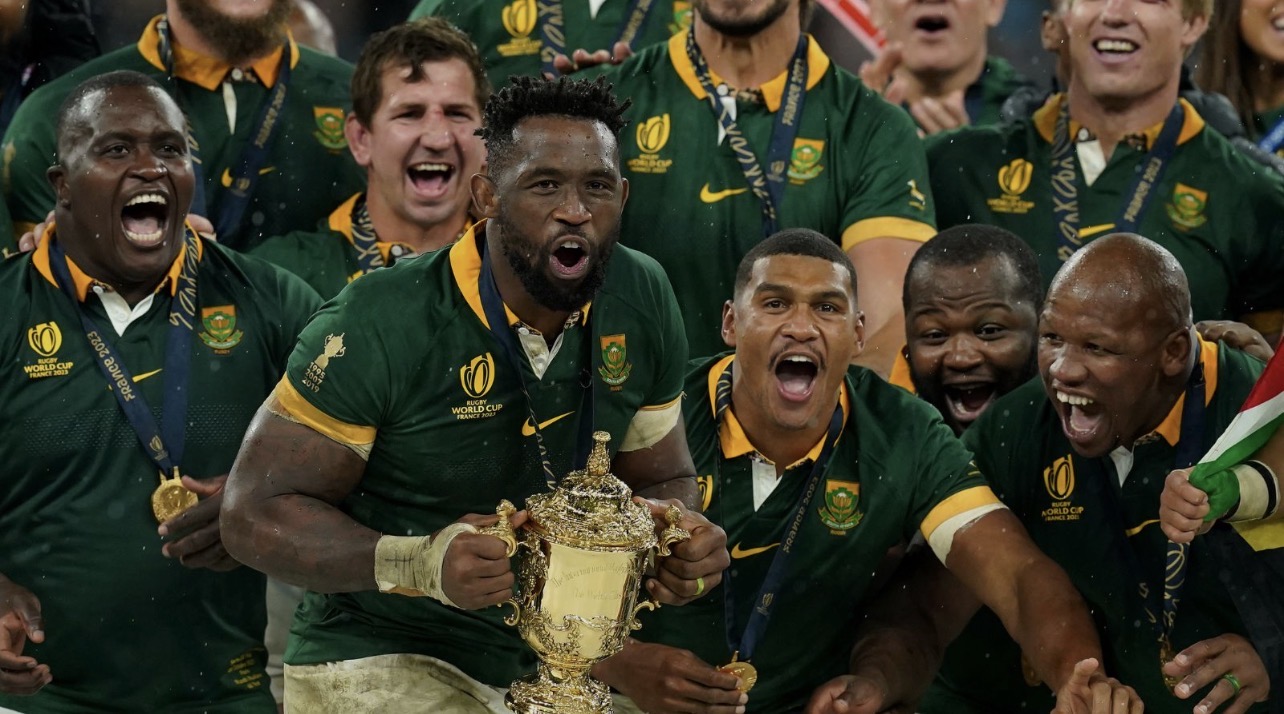
World Rugby has confirmed South Africa as the host of the 2027 Rugby World Cup — a tournament that economists project will inject R28 billion into the local economy and attract 500,000 international visitors.
South Africa has been confirmed as the host nation for the 2027 Rugby World Cup — the world’s third-largest sporting event by viewership — in a decision that has been welcomed by government, business, and sports fans alike. The tournament, which will be held across eight cities between September and November 2027, is projected to generate R28 billion in economic activity and attract more than 500,000 international visitors.
South Africa’s successful bid was built on its track record of hosting major sporting events — including the 2010 FIFA World Cup and the 2023 Rugby World Cup, which the Springboks won — and the quality of its existing stadium infrastructure. Eight venues across Johannesburg, Cape Town, Pretoria, Durban, Port Elizabeth, Bloemfontein, Nelspruit, and East London will host tournament matches.
Economic Opportunities
The tourism and hospitality sector is expected to be the primary beneficiary of the World Cup. Hotel bookings across major host cities are already being made two years in advance, and airline capacity between South Africa and key rugby nations — including England, New Zealand, Australia, France, and Argentina — is expected to increase significantly.
“This is bigger than rugby. This is a chance to show the world a South Africa that works — world-class stadiums, warm hospitality, incredible scenery. The eyes of the world will be on us.” — Patricia de Lille, Minister of Tourism
Infrastructure Challenges
Hosting a Rugby World Cup is not without its challenges. Concerns have been raised about public transport capacity, safety and security, and the reliability of electricity and water supply in host cities. The government has committed R4.2 billion to infrastructure upgrades specifically related to the tournament, but opposition parties and civil society groups are monitoring spending carefully given South Africa’s history of cost overruns on major events.