
Where Zama Zamas Get Guns: Ask Where SA’s Missing Guns

By Mathipa Phishego
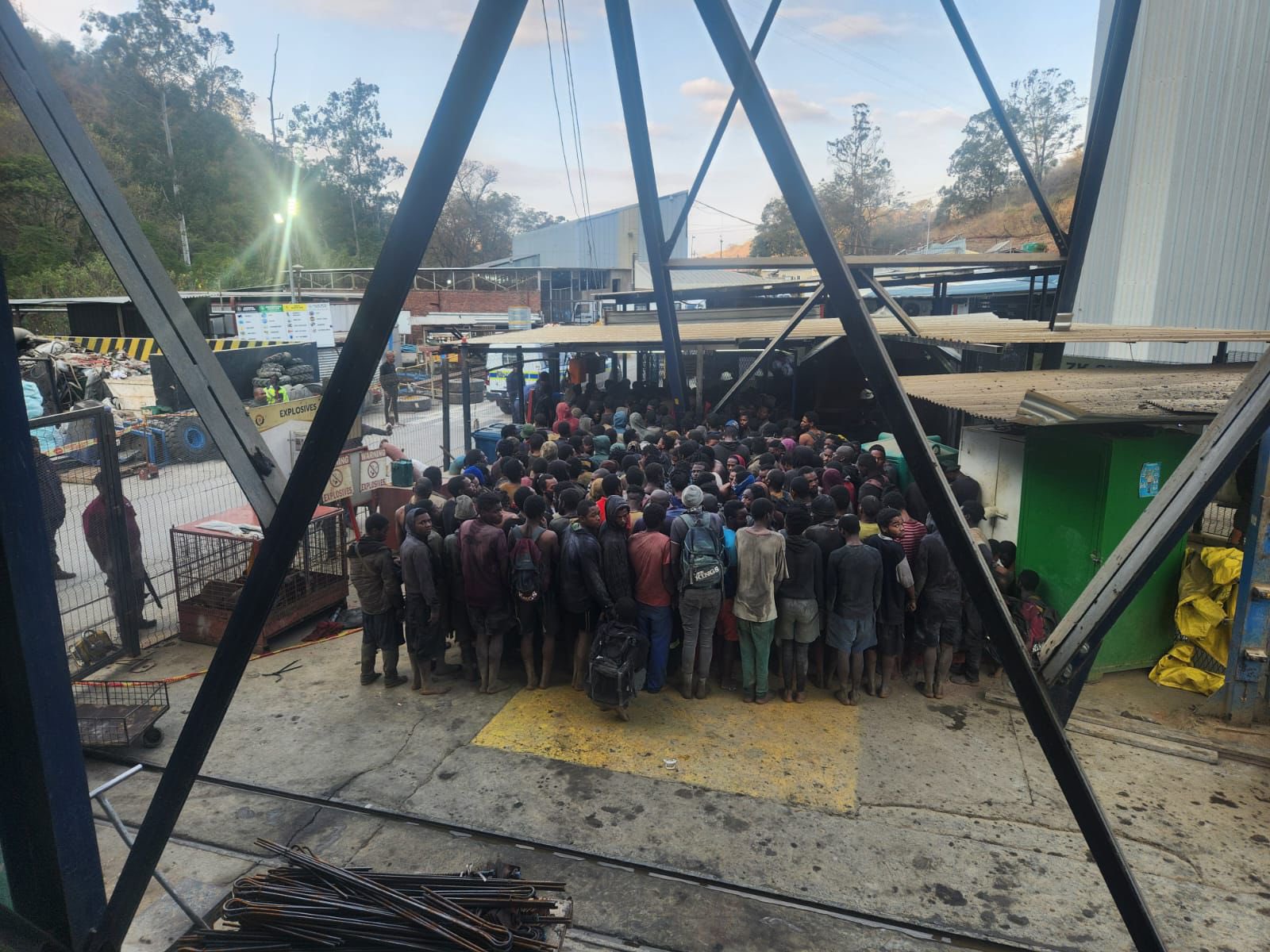
(InsideOutNews) Every time heavily armed zama zamas appear in the news, South Africans ask the same question: Where are they getting these guns? It is a legitimate question. Illegal miners have been found in possession of assault rifles, pistols, explosives and other weapons normally associated with organized criminal networks. But perhaps we are asking the question too narrowly.
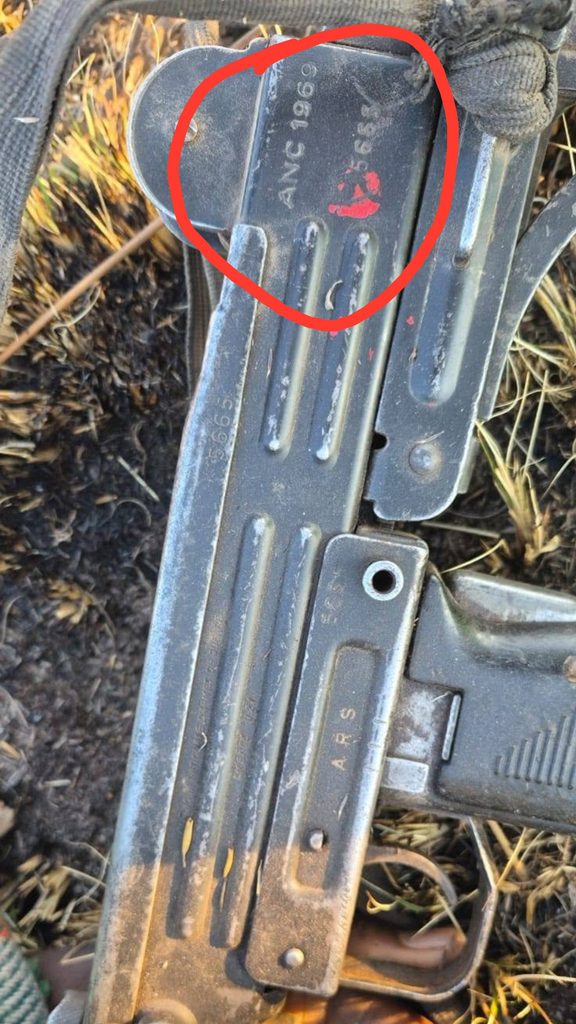
Instead of looking only at the men underground, perhaps South Africa needs to look backwards at the country’s own history of political violence, covert weapons caches, regional wars and thousands upon thousands of firearms that were never properly accounted for. South Africa did not suddenly become a country awash with illegal firearms when illegal mining became a national talking point. We have been dealing with the consequences of weapons accumulated during decades of conflict.
The apartheid years left behind a complicated weapons legacy. Investigations into covert security operations in the early 1990s exposed clandestine arms networks and weapons caches that had been built up and distributed through political and security structures. The Truth and Reconciliation Commission later documented how weapons from apartheid-era security structures were supplied to political networks.
One of the most striking cases involved Philip Powell, an IFP figure who became associated with a substantial weapons cache. In 1999, Powell led authorities to a cache containing approximately seven tons of weapons and ammunition.
Seven tons should make us pause. But it was not necessarily the entire story.
Investigations into the former apartheid security apparatus found evidence of considerably larger quantities of weapons being moved through clandestine networks. Reports at the time indicated that weapons diverted from Vlakplaas alone could have amounted to enough material to fill dozens of ten-ton trucks.
The question is obvious: Where did all those weapons eventually go?
Some were recovered. Some were destroyed. Some were surrendered. But the historical record also contains significant quantities that were never satisfactorily accounted for.
This is where the legacy of people such as Eugene de Kock, the former apartheid-era security operative known as “Prime Evil”, becomes relevant. De Kock’s operations were part of a broader system of covert violence and weapons distribution. His history is not evidence that today’s zama zamas are carrying weapons from his particular caches; that would be speculation. What it does demonstrate is that enormous quantities of weapons once circulated through clandestine networks in this country, long before the modern zama zama crisis.
South Africa was also surrounded by countries experiencing devastating conflicts. Mozambique experienced a prolonged civil war, Angola endured decades of armed conflict, and the region became saturated with weapons. South Africa’s borders subsequently became part of a wider regional trafficking environment.
So when an illegal miner is found with an AK-47 decades later, it is simplistic to assume there is only one possible explanation. A firearm can be stolen from a legitimate owner, trafficked across a border, obtained through an organised-crime network, diverted by corrupt officials or passed through several hands before eventually reaching an illegal mining syndicate.
The real question is therefore not simply, “where did this zama zama get his gun?” It is: “What criminal supply chain put that gun into his hands?” That distinction matters because the man carrying the rifle underground may not be the person who acquired it, paid for it or controls the gold.
Illegal mining is increasingly understood as an organised-crime problem rather than simply a problem of undocumented people entering abandoned mines. There are financiers, buyers, transporters, suppliers, people moving money and people providing protection. There are also people buying the gold once it comes out of the ground.
Yet public debate often stops at the zama zama. We see the person underground and fail to examine the network above ground.
That is where the conversation about foreign nationals also needs greater sophistication. It is legitimate for South Africa to be concerned about illegal immigration, porous borders and cross-border organised crime. But blaming an entire nationality without evidence that a foreign government (Lesotho per say) is financing illegal miners does not solve the problem.
Take the recurring claim that the Lesotho government funds zama zamas. That is a serious allegation and should require serious evidence. There is a much more productive question to ask: Who are the criminal networks operating across the South Africa-Lesotho border?
Who supplies the weapons? Who moves people? Who launders the money? Who buys the gold? Who provides forged documents and transport? Who provides protection? And who sits at the top of the pyramid?
Because zama zama’s and organized crime does not care about political slogans, it cares about profit.
A criminal network can involve South Africans and foreign nationals. It can involve corrupt officials, businessmen, smugglers, gang members and people operating legitimate businesses as fronts. The person holding the rifle is only one piece of the puzzle. The person financing the operation may never enter the mine, while the person buying the gold may never see a zama zama.
That is why South Africa needs to stop asking only about the zama zama’s. Follow the money. Follow the weapons.
There is another uncomfortable reality: South Africa has repeatedly demonstrated that criminal markets thrive when there is a gap between supply and enforcement. If firearms can be stolen from police stations, defence structures, security companies, private homes and other legitimate sources, they can eventually find their way into organised crime. If weapons can be smuggled across borders, criminal groups will exploit the routes. If abandoned mines contain valuable deposits, criminal syndicates will exploit them. And if buyers are willing to purchase illegally mined gold, someone will supply it.
This is an ecosystem, and ecosystems cannot be dismantled by arresting only the people at the bottom.
South Africa therefore needs a much deeper investigation into the weapons circulating in illegal mining. Every firearm recovered from a zama zama should, where possible, be traced: where was it manufactured, who legally owned it, was it ever reported stolen, was it part of a police or military consignment, was it previously recovered, did it cross a border, and which criminal network supplied it?
If authorities could build a comprehensive picture of the firearms recovered from illegal mining operations over the past decade, South Africans might finally begin to see the actual supply chains rather than argue over competing theories.
Perhaps some guns are coming through borders. Perhaps some are coming from robberies. Perhaps some are being supplied by organised criminal groups. Perhaps corrupt officials are involved. Perhaps historical weapons caches have contributed. Perhaps the answer is a combination of all of these.
But we should find out.
South Africa’s zama zama crisis is therefore not simply an immigration problem, a mining problem or a policing problem. It is a criminal economy, and criminal economies have customers.
The zama zama may dig the gold, but someone else buys it, moves it and finances the operation. Someone supplies the equipment. Someone provides the weapons. Someone provides protection. And somewhere, someone is making money.
That is the investigation South Africa needs. Because before we ask “Where are the zama zamas getting these big guns?”, we should perhaps ask a much older question:
Where did South Africa’s missing guns go?
And then we should connect the dots not through rumours, not through xenophobia and not through political convenience, but through evidence.